
B2B buyers don’t make impulsive decisions. They spend hours reading whitepapers, skimming blog posts, listening to industry podcasts, and analyzing LinkedIn conversations before they purchase anything. You’re invisible if your brand isn’t helping them during that silent research phase.
That’s precisely where content marketing becomes the power move most B2B companies overlook or underuse. Content marketing is a systematic strategy for winning attention, trust, and eventually business, long before you ever talk to a prospect.
Let’s unpack how (and why) content marketing is the real engine behind successful B2B client attraction today!
If you’re in B2B, you already know this: People don’t buy from companies. They buy from companies they trust. And that trust isn’t built through flashy ads or cold emails alone. Instead, it’s built by showing expertise before you even have a conversation. That’s where a smart content marketing strategy changes the game.
Most successful B2B companies don’t just push their products and revolve their strategies around them. They know it might not help them anyway. So they invest in content marketing. They publish in-depth insights, future trends, and research reports that many executives also bookmark and cite.
In B2B, expertise closes deals long before the first sales call. When your content showcases innovative thinking, real data, and helpful opinions, your brand naturally becomes the go-to source for information and products. And in high-stakes B2B deals, that’s the edge you need.
Buying decisions in B2B are long. They involve multiple people, budget approvals, and endless research. Content is how you stay in the conversation at every stage.
Without strategic content, you are either invisible or forgotten. With it, you are the company they trust at every step.
Let’s get tactical. When your content answers real buyer questions and targets high-intent keywords, you don’t chase clients. They find you wherever they go online. And that’s arguably the best thing about content marketing. Moreover, you are seen by random people and your targeted audience. The ones actively looking for solutions, you provide.
Companies like Ahrefs and Moz have mastered this. They dominate SEO by publishing detailed posts around industry keywords. Their leads aren’t casual readers; they’re professionals actively seeking solutions. Long-form content like ultimate guides, step-by-step solutions, how-tos, and industry trend analyses doesn’t just rank, it pulls in serious buyers.
Not all leads are equal. When it comes to leads, quality is always better than quantity. And that’s what content strategy delivers. Good content filters out low-fit prospects. It helps attract people who care about your actions because you speak directly to their pain points.
Smart lead magnets, such as actionable eBooks, niche-specific webinars, and interactive tools, get the right prospects to raise their hands and show buying intent.
A strategic B2B content plan requires more than publishing blogs and articles on the website. It demands a lot of things. Before you create a content strategy, you must know who you are targeting, what they need, and how to deliver your content effectively.
The mix of research, content formats, and distribution turns random posts into a lead-generating machine. When it comes to a content plan, here’s what matters most.
Your content is only as good as how well you understand the people reading it. Weak buyer personas can lead to weak content and weak results. Therefore, you must not neglect your audience. You need to go beyond job titles and dig into:
For example, if you sell B2B marketing software, the CMO cares about results and cost efficiency. At the same time, the marketing manager worries about usability and reporting features. Each has different pain points, so the message should also be different.
Savvy content marketers and companies segment their content according to their audience. And you must do the same.
For instance, you can create one blog for CMOs and another for marketing teams. Similarly, arrange one webinar for sales leadership and another for SDR managers. This strategy can help you generate more leads and conversions.
In content marketing, especially for B2B brands, posting random stuff on different online platforms doesn’t cut it. The best B2B companies carefully mix formats based on goals and stages. You should do the same! You need to post multiple types of content for better results strategically. The most helpful content types include:
Detailed and informative blog posts and articles help content marketers get impressive results. However, they must be clear, niche-focused, and provide real value to readers.
Whitepapers and reports also attract serious buyers and generate more leads than expected. They demonstrate authority, build trust, and are excellent for lead generation.
Social proof generally closes deals. They show how your products or services solved real problems for real clients. Therefore, make sure to leverage these content types as well.
They are also very effective at explaining complex solutions. Plus, executives prefer video over walls of text when they’re busy. Additionally, they cut through the noise and reach interested people without breaking the bank.
Email newsletters can also help you close lots of deals. However, they must be thoughtful and targeted, offering genuine value to the audience.
Today, ranking content isn’t as easy as it used to be a few years ago. Now, you can’t just “accidentally” rank anymore. The competition these days in almost every niche is at a sky-high level. Therefore, most B2B companies treat SEO as a serious growth channel. They just don’t randomly post anything online. Instead, they create a solid SEO strategy to get maximum visibility.
If you also want to create a strong and profitable content and keyword strategy, try these tips;
Remember, keyword research isn’t about chasing traffic. It’s about finding what genuine buyers are searching for. Therefore, focus on the terms your ideal clients use. Use tools like Ahrefs, SEMrush, and Google Keyword Planner for solid keyword research. They provide detailed insights into each keyword and help you make the right decision.
The best SEO happens when helpful writing meets intelligent optimization. Forcing keywords breaks trust as readers spot it instantly. Instead, weave keywords naturally into headlines, intros, and body text, and always focus on clarity first.
Search engines reward content that solves the searcher’s real need. Someone searching “how to choose CRM software” wants advice, not a product pitch. Match content to the goal behind the query.
Featured snippets steal both attention and clicks. Therefore, write clear, direct answers. Also, use numbered lists, bullet points, and short paragraphs.
Publishing great content is only half the battle. If nobody sees your content, it’s of no use. Therefore, you must distribute and promote your content on multiple platforms.
For content distribution and promotion, use these techniques:
As a content marketer, you can’t manage what you don’t measure. Select the right and most helpful KPIs (Key Performance Indicators). After that, measure them quite often.
Here are some of the most critical KPIs you might use to measure the overall success of your content marketing campaigns;
Tools like Google Analytics 4, HubSpot, SEMrush, and LinkedIn Campaign Manager can help you know how well your campaigns perform. They give you almost all the data to measure success and adapt strategies accordingly.
We are all prone to mistakes. Even the best B2B companies sometimes make various mistakes that weaken their content marketing results. Here are three common mistakes and how to fix them.
Too many B2B teams pump out endless blog posts and beginner guides, but forget what happens next. You’re losing deals if your content only attracts early-stage interest without nurturing it toward a decision.
To avoid this issue, build a full-funnel content plan. Also, create detailed product comparisons, ROI calculators, implementation guides, and customer success stories. These assets move prospects from “just curious” to “ready to buy.”
The entire content marketing strategy revolves around “content.” So, it must be powerful, valuable, and engaging. Nothing sinks a B2B strategy faster than thin, surface-level content. If your content feels rushed and generic, your audience won’t trust you. So, never compromise on content quality.
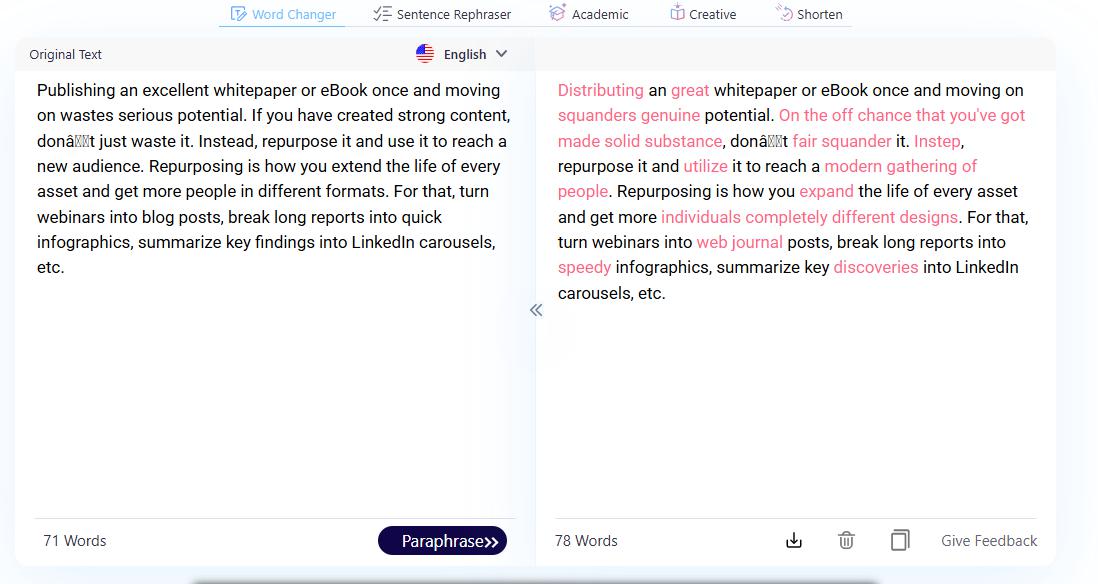
Instead, craft explicit, informative, and helpful content. To write high-quality content, know your readers and their needs and craft content to gratify them. Also, ensure clarity and use understandable language. For that, improve your sentences unless they are flawless. You can also use a paraphrase tool to refine your text and make it clear. A good paraphraser can help restructure your content while preserving its original meaning and tone.
Publishing an excellent whitepaper or eBook once and moving on wastes serious potential. If you have created strong content, don’t just waste it. Instead, repurpose it and use it to reach a new audience. Repurposing is how you extend the life of every asset and get more people in different formats. For that, turn webinars into blog posts, break long reports into quick infographics, summarize key findings into LinkedIn carousels, etc.
Content marketing is the engine that drives awareness, trust, and real business growth. It shortens sales cycles, nurtures better leads, and positions your brand as the clear choice in a noisy market.
But in this world, success takes more than posting content. It demands deep audience understanding, a focus on the full buyer’s journey, consistent SEO optimization, active promotion, and a commitment to ongoing measurement and refinement. There’s no shortcut to success in this landscape. But there’s also no ceiling on the results you can achieve.

A seasoned technology writer and marketing consultant with over a decade of experience helping businesses grow online. I specialize in content marketing, SEO, web design, and e-commerce development. I am enthusiastic about using cutting-edge technology to acquire high-quality traffic, generate leads, and increase sales for my clients.