SEO is no longer just about targeting individual keywords and hoping to rank.
Search engines have evolved. They now prioritize context, relevance, and authority across entire topics—not just isolated pages.
This is where SEO topical maps come in.
If you want to dominate rankings in 2026, understanding and implementing topical maps is no longer optional. It is one of the most powerful ways to build long-term organic growth.
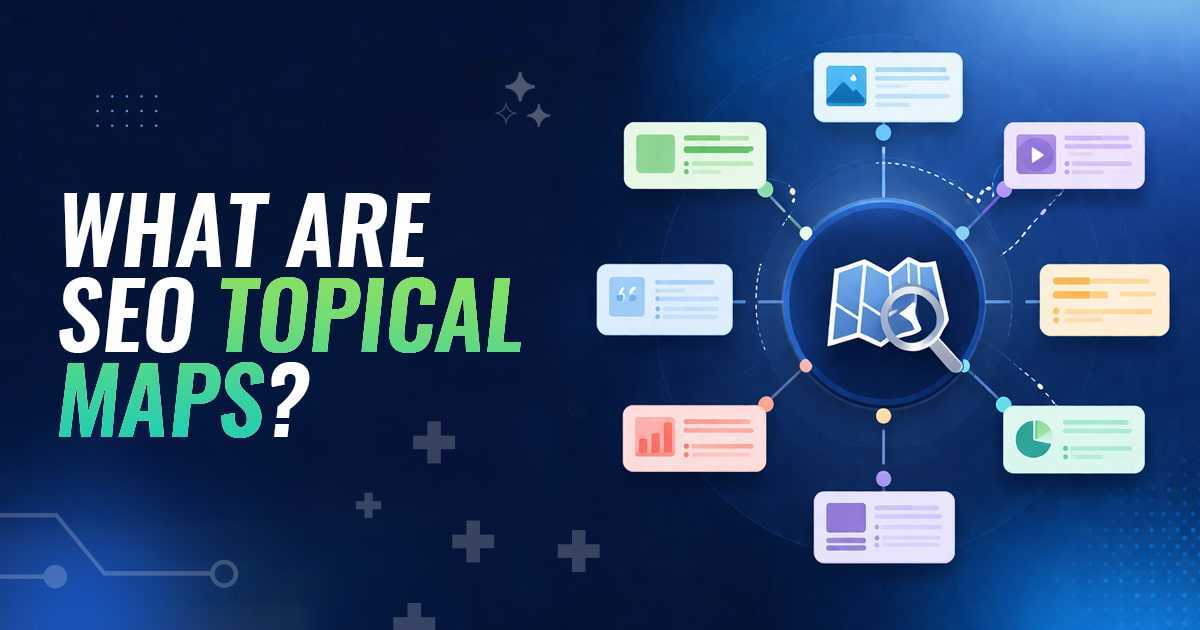
An SEO topical map is a structured content strategy that organizes your website around a central topic and all its related subtopics.
Instead of creating random blog posts targeting different keywords, a topical map connects everything into a clear, strategic content ecosystem.
At its core, a topical map helps search engines understand:
Think of it like building a knowledge hub instead of a collection of disconnected articles.
When done correctly, this approach signals to search engines that your website is an authority on a subject, not just another content publisher.
The shift toward topical authority is driven by how search engines now evaluate content.
Google no longer ranks pages purely based on keywords and backlinks. It looks at how well you cover an entire topic.
This means if you only create one article on a subject, you are unlikely to compete with websites that have built complete topic coverage.
Topical maps solve this problem by ensuring your content strategy is deep, structured, and interconnected.
They also align perfectly with modern search behavior. Users don’t just want one answer—they want complete understanding. A topical map allows you to guide them through that journey.
Topical maps work because they strengthen multiple ranking factors at once.
First, they improve topical authority. When your website covers a subject from multiple angles, search engines trust your content more.
Second, they enhance internal linking structure. Every piece of content supports another, creating a strong network that improves crawlability and indexation.
Third, they increase keyword coverage. Instead of targeting one keyword, you naturally rank for hundreds of related queries.
Finally, they improve user experience. Visitors can easily navigate through related topics, increasing engagement and time on site.
All of this leads to higher rankings, more traffic, and better conversions.
A well-built topical map is not random—it follows a clear structure.
At the center is your pillar topic, which represents the main subject you want to rank for. This is usually a broad, high-value keyword.
Around that, you build supporting content that covers subtopics in depth. Each piece answers a specific question or intent related to the main topic.
These pieces are then connected through strategic internal linking, creating a clear relationship between all pages.
The result is a content ecosystem where every page has a purpose and contributes to overall authority.
Begin by identifying the main topic you want to dominate.
This should be closely aligned with your business goals and target audience. For example, if you run an SEO agency, your core topic might be “SEO services” or “search engine optimization.”
The key is to choose a topic that has both search demand and business value.
Once you have your main topic, expand it into all possible subtopics.
This includes:
The goal is to cover the topic completely, not partially.
You are essentially mapping out everything a user might want to know about that subject.
Not all keywords should become separate articles.
Some belong together under one topic, while others need their own dedicated pages.
Grouping keywords correctly ensures your content is focused, not diluted.
This step is where most people fail—and where real SEO advantage is created.
Now, turn your grouped topics into content.
Create one pillar page that broadly covers the main topic, then support it with detailed articles on subtopics.
Each supporting article should go deep into one specific area while linking back to the main topic.
This creates a strong topical cluster that search engines can easily understand.
Internal linking is what turns your content into a topical map.
Every related article should link naturally to other relevant pages within the cluster.
This helps search engines discover content faster and understand the relationship between topics.
It also improves user navigation, which directly impacts engagement.
A topical map is not a one-time task.
As new trends, keywords, and questions emerge, your content should evolve.
Updating and expanding your map ensures you stay relevant and maintain your authority over time.
Traditional SEO focuses on individual keywords and isolated pages.
Topical SEO focuses on complete subject coverage.
With traditional SEO, you might create 10 unrelated blog posts targeting different keywords.
With a topical map, those same 10 posts are strategically connected, reinforcing each other and building authority.
This is why topical SEO consistently outperforms old keyword-based strategies.
Many businesses try to implement topical maps but fail due to poor execution.
One common mistake is creating too much content without structure. Publishing random articles does not build authority.
Another mistake is ignoring internal linking. Without connections between pages, your content loses its contextual strength.
Some also focus only on informational content and ignore commercial intent, which limits conversions.
The key is balance—structure, depth, and intent must all work together.
Websites like HubSpot and Healthline dominate search results because they don’t just publish content—they build topical ecosystems.
They cover subjects in extreme depth, connect content strategically, and continuously expand their coverage.
This is exactly what search engines reward.
The purpose of a topical map is to organize content around a central theme, helping search engines understand your expertise and improving rankings across related keywords.
Yes, they are essential. Search engines now prioritize topical authority, making structured content strategies more important than ever.
There is no fixed number. A strong topical map can have anywhere from 10 to 100+ pages depending on the depth of the topic.
Yes. They improve internal linking, keyword coverage, and authority, all of which contribute to better rankings.
Results can take a few months, but topical maps provide long-term, sustainable SEO growth.
SEO topical maps are not just a trend—they are the foundation of modern SEO.
If you want to rank in 2026 and beyond, you need to move beyond isolated keywords and start building structured, interconnected content.
When you cover a topic deeply, connect your content strategically, and focus on user intent, you don’t just rank—you dominate.
The websites winning today are not publishing more content.
They are publishing smarter, structured content.
And that is exactly what a topical map helps you achieve.

A seasoned technology writer and marketing consultant with over a decade of experience helping businesses grow online. I specialize in content marketing, SEO, web design, and e-commerce development. I am enthusiastic about using cutting-edge technology to acquire high-quality traffic, generate leads, and increase sales for my clients.